Industrial Coating Systems
Victoria Branch
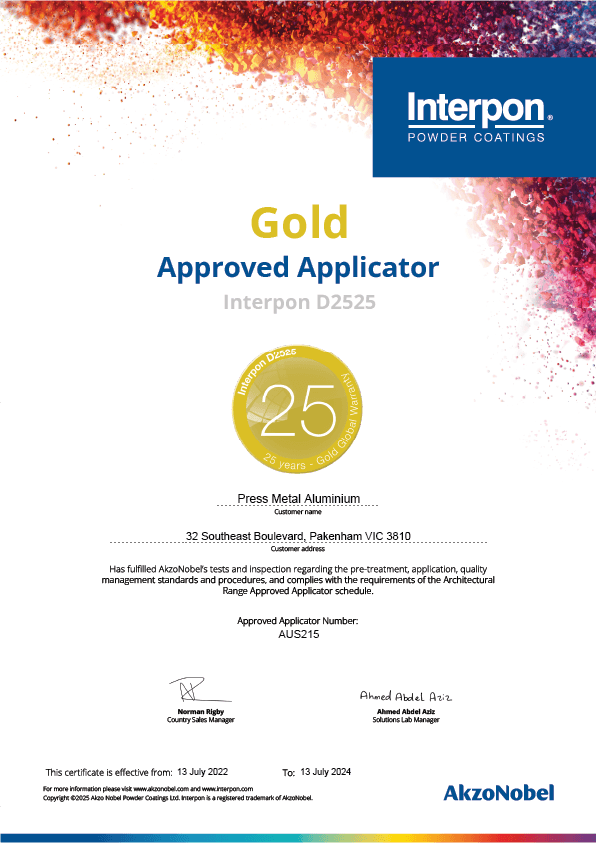
10–25 Years
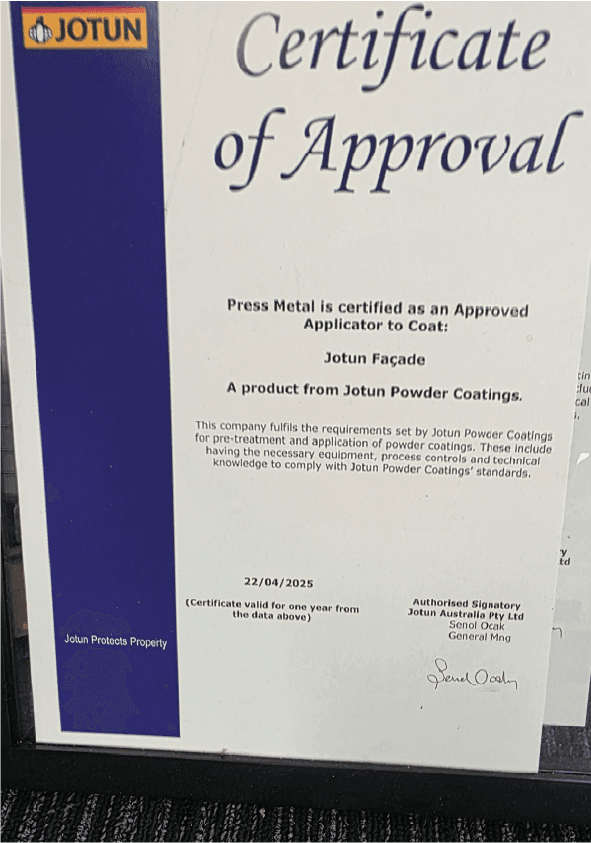
15–25 Years

Surface Preparation
Multi-stage chemical Oxsilan chrome-free pre-treatment to remove oxides and create a chrome-free conversion layer for bonding.
Eletrostatic Application
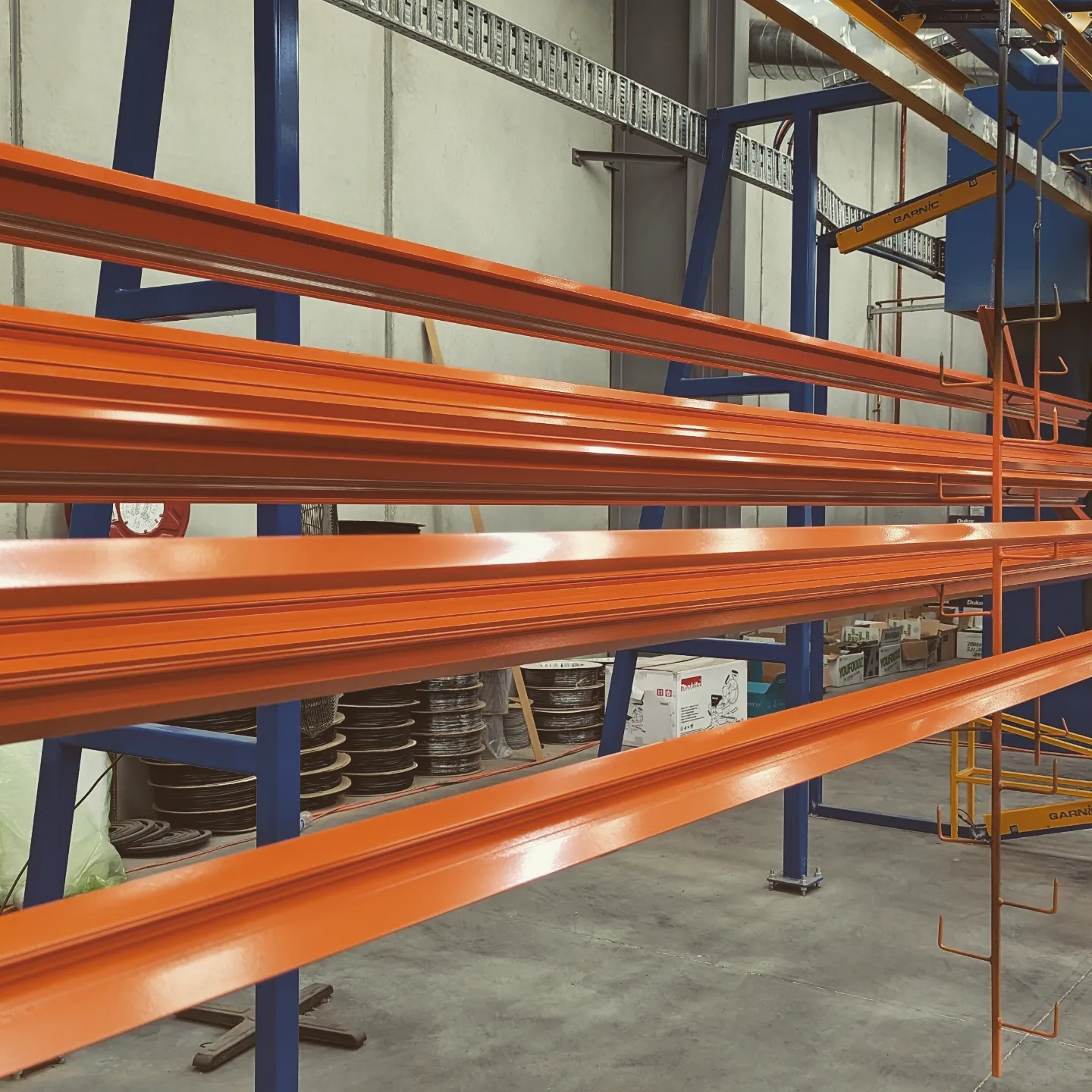
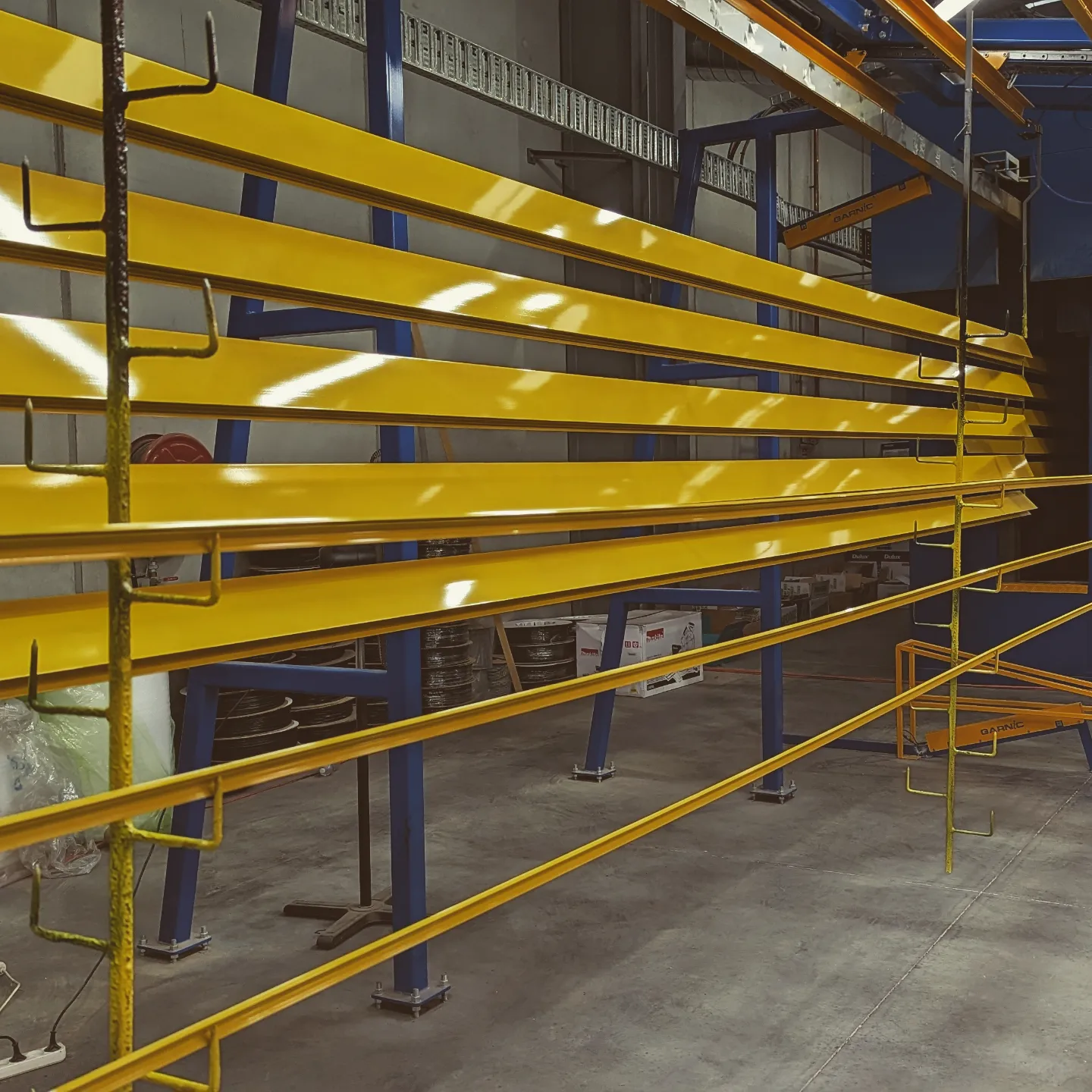
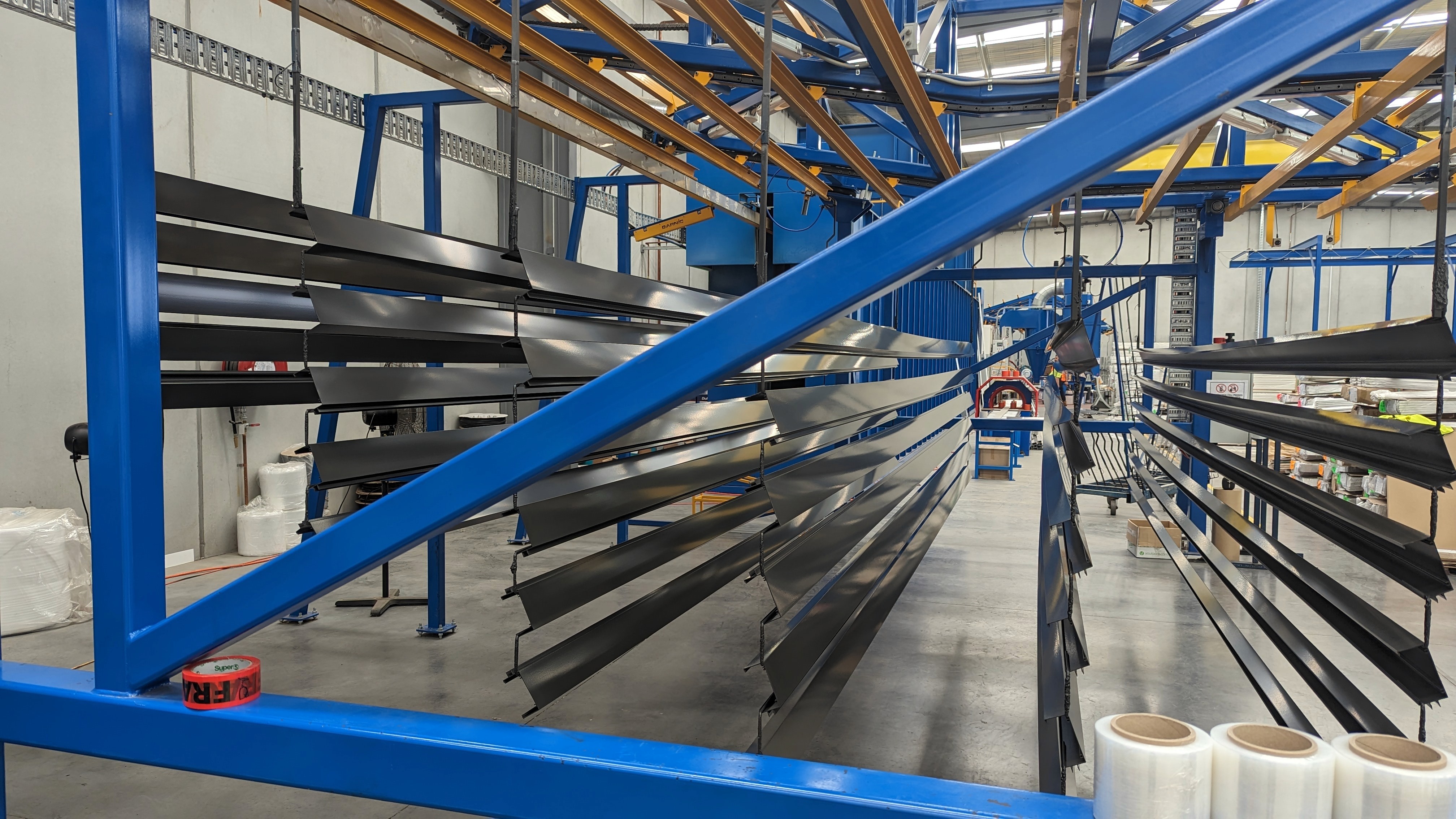
Precision robotic spray systems apply a uniform charged powder cloud to grounded extrusion profiles.
Curing Cycle
Controlled convection heating at specific T/t profiles to cross link the polymer for a resilient finish.
Quality Control
Comprehensive testing for gloss, film thickness, adhesion (cross-hatch), and batch traceability.
" result="fe5EdH0fc-1612248728-shadow-outset-0-flood"/><feComposite in="fe5EdH0fc-1612248728-shadow-outset-0-flood" in2="fe5EdH0fc-1612248728-shadow-outset-0-blur" operator="in" result="fe5EdH0fc-1612248728-shadow-outset-0"/></filter><filter filter-units="objectBoundingBox" height="160.0%" id="fe5EdH0fc-1612248728-shadow-inset" width="140.0%" x="-20.0%" y="-30.0%"><feGaussianBlur in="SourceAlpha" result="fe5EdH0fc-1612248728-shadow-inset-0-blur" stdDeviation="2"/><feOffset dx="0" dy="2" in="fe5EdH0fc-1612248728-shadow-inset-0-blur" result="fe5EdH0fc-1612248728-shadow-inset-0-offset"/><feComposite in="fe5EdH0fc-1612248728-shadow-inset-0-offset" in2="SourceAlpha" k2="-1" k3="1" operator="arithmetic" result="fe5EdH0fc-1612248728-shadow-inset-0-composite"/><feFlood flood-color="rgba(73, 222, 35, 0.42)" result="fe5EdH0fc-1612248728-shadow-inset-0-flood"/><feComposite in="fe5EdH0fc-1612248728-shadow-inset-0-flood" in2="fe5EdH0fc-1612248728-shadow-inset-0-composite" operator="in" result="fe5EdH0fc-1612248728-shadow-inset-0"/></filter><path d="M 10 0 C 15.523 0 20 4.477 20 10 C 20 15.523 15.523 20 10 20 C 4.477 20 0 15.523 0 10 C 0 4.477 4.477 0 10 0 Z" id="fe5EdH0fc-1612248728" transform="translate(10 10)"/></defs><mask height="194.0%" id="fe5EdH0fc-1612248728-shadow-mask" width="194.0%" x="-47.0%" y="-47.0%"><rect fill="white" height="100%" width="100%"/><use fill="black" href="%23fe5EdH0fc-1612248728"/></mask><g filter="url(%23fe5EdH0fc-1612248728-shadow-outset)" mask="url(%23fe5EdH0fc-1612248728-shadow-mask)"><use fill="black" href="%23fe5EdH0fc-1612248728" stroke-opacity="0" stroke-width="0" stroke="black"/></g><use fill="rgb(73, 222, 35)" height="20px" href="%23fe5EdH0fc-1612248728" id="fe5EdH0fc" width="20px"/><use filter="url(%23fe5EdH0fc-1612248728-shadow-inset)" href="%23fe5EdH0fc-1612248728"/></svg>)
Compliant with modern environmental and safety standards
VIC
Uniform nano-ceramic conversion layer across 6063-T5/T6 and 6061-T6 substrates
VIC
Improved adhesion performance for powder coating systems
VIC
Reduced sludge and chemical waste compared to chromate processes
VIC
Ready for Architectural Specification?
Get direct access to Press Metal integrated coating services with guaranteed lead times and certified quality.
Frequently Asked Questions
What powder coating warranty does PMAA provide?
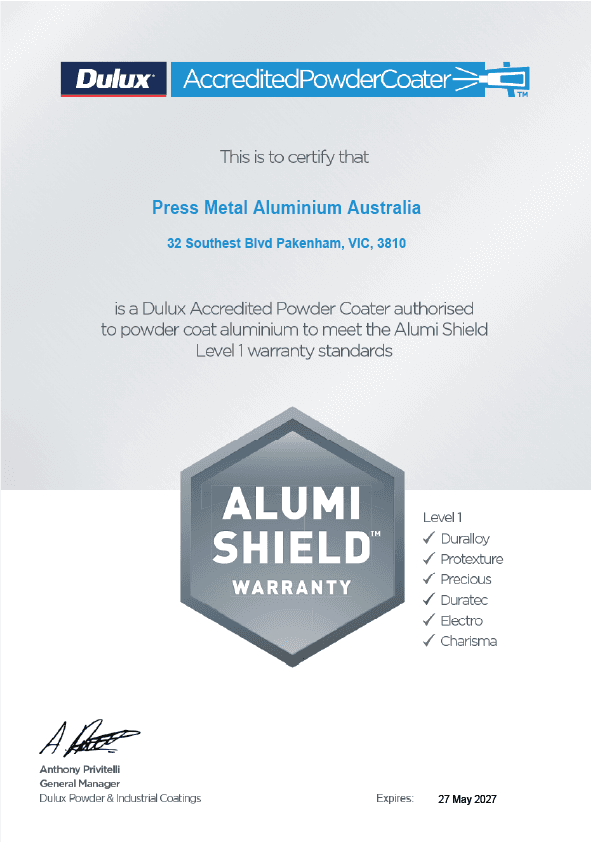
PMAA applies Dulux and Interpon systems with 10–25 year warranties and Jotun systems with 15–25 year warranties, depending on application, environment, and coating specification compliance.
What aluminium alloys are best for powder coating?
6063-T5 and 6063-T6 are preferred due to smooth surface finish post-extrusion. 6061-T6 can also be coated but requires tighter surface preparation due to higher silicon and magnesium content.
What film thickness should be specified?
Typical architectural coatings range between 60–80 microns, while harsher environments may require 80–120 microns for improved corrosion resistance.
How does powder coating compare to anodising?
Powder coating provides a thicker organic barrier layer, offering better impact resistance and colour flexibility, while anodising integrates with the aluminium oxide layer for a metallic finish.
Can PMAA match custom colours?
Yes. Custom colour matching is available using Dulux, Interpon, and Jotun systems, subject to minimum batch volumes.
What causes coating failure on aluminium?
Common causes include:
Inadequate surface preparation
Contamination (oil, oxide layer inconsistency)
Incorrect curing temperature
Is powder coating suitable for coastal environments?
Yes, when using high-performance architectural powders (e.g., Interpon D series) with appropriate film thickness and Oxsilan chrome-free pre-treatment.